A gaming icon needs more than a place on a car-selection screen. It needs a shape you remember, a reason to choose it again and enough depth to reward your attention. The Nissan Skyline GT-R R34 brings all three together. Its appeal sits at the meeting point of a distinctive road car and the ways games let people spend time with cars they may never own.
That does not mean every enthusiast discovered the R34 with a controller. It means gaming gives us a useful way to understand why the car's identity travels so well beyond its original market and production period.
A real car beneath the mythology
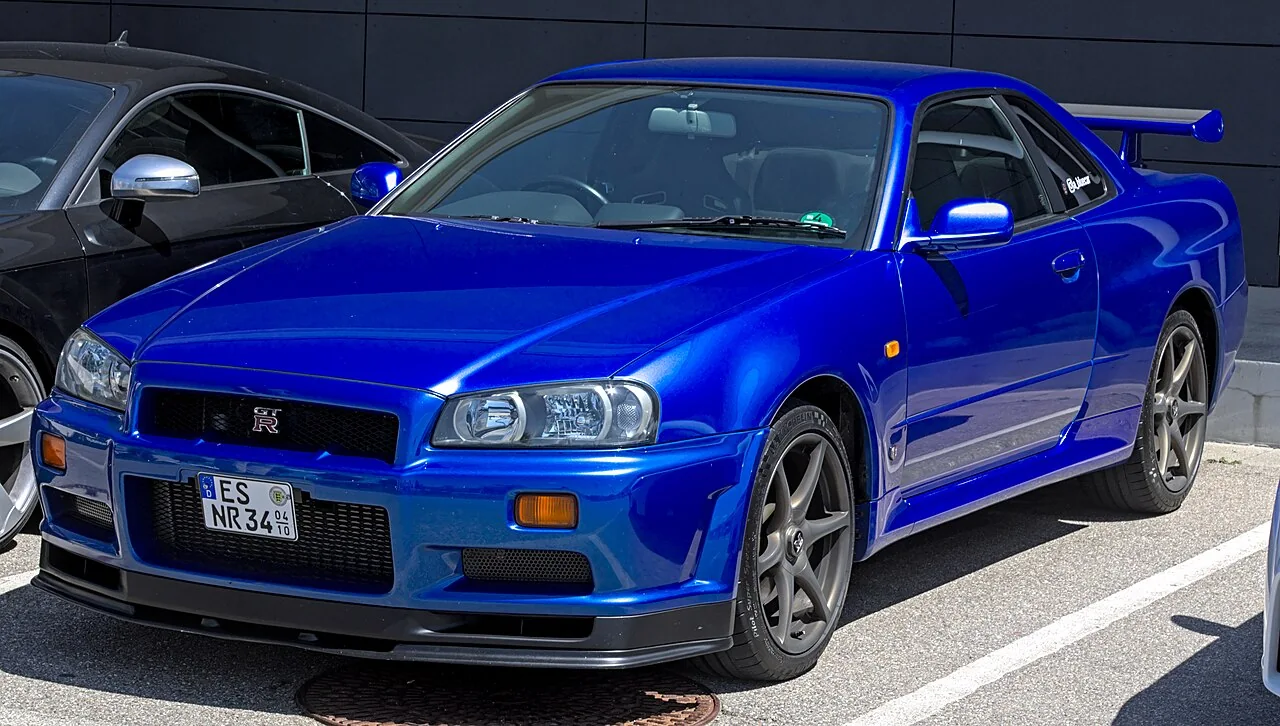
First, a distinction that often gets blurred: R34 is a Skyline generation, not a synonym for GT-R. Nissan's heritage record dates the wider R34 Skyline's arrival to 1998 and the GT-R's introduction to 1999. The same record identifies the GT-R's RB26DETT as a 2,568cc twin-turbo straight-six.
Nissan's R34 retrospective records a six-speed manual transmission and all-wheel drive. It also describes the colour multifunction display that brought performance information into the cabin.
Those details give the legend something concrete to attach to. The R34 is not interesting only because a game or film made it visible. It is a technically particular car, with a recognisable engineering identity. Conversely, there is no need to repeat extreme modified power claims to make that identity compelling.
A car you can return to
The gaming connection is documented, not just nostalgic shorthand. Polyphony Digital's official Gran Turismo 5 list includes several R34 GT-R variants. In March 2024, Forza's official Spotlight event centred on the 2002 Skyline GT-R V-Spec II. These are specific examples of the car appearing across racing-game series and over time, rather than a claim that it features in every instalment.
Our interpretation is that repetition matters differently in a game than in a poster. You can choose a car, learn its responses within that game's physics and return to it after trying alternatives. The familiarity becomes participatory. It is your selection and your time, even though the physical car is far away.
There is an important boundary here: mastering a game's version of an R34 is not experience of driving a real GT-R. Simulated performance figures and tuning outcomes should not be treated as workshop advice or evidence of real-world capability. The connection is cultural, not a transferable driving qualification.
The engineering almost looks like a game interface
The R34's performance display offers a particularly neat connection between the real and digital worlds. Information normally hidden inside a machine becomes something a driver can look at and interpret. For an audience accustomed to gauges and telemetry on a screen, that is an accessible idea.
This is a visual and conceptual comparison, not a claim about who designed the display. Nor should the production GT-R's engineering be collapsed into the interfaces or upgrade menus of any particular game. The attraction is the conversation between them: real vehicle technology can make a car feel unusually at home in a digital garage.
Nissan's August 2000 announcement also documents the V-spec II's carbon-fibre bonnet with a NACA duct. Small distinctions like this give enthusiasts details to notice. A model name becomes the beginning of a question rather than the end of it.
Film and modified-car culture add another layer
The R34 is also associated with 2 Fast 2 Furious, Universal's 2003 film; the Red Bull Ring's exhibition description documents that connection. That screen identity belongs alongside the gaming connection, rather than replacing the underlying car's history. A film car, a modified show car and a standard road-going GT-R are not interchangeable specifications.
For this article, the cultural point is the overlap: the same basic silhouette can mean engineering curiosity, a favourite virtual garage or a particular style of modified-car imagery. Different audiences can arrive at the same car through different doors.
Personalisation is central to our reading of that appeal. A memorable standard shape gives a modified version something to work against. Changing its wheels, colour or stance can signal an owner's taste while leaving the car recognisable. That helps explain the attraction of building an interpretation of an R34, on screen or in the real world, without assuming that every modification improves it.
An icon is a beginning, not a specification
The R34's lasting interest is richer when the distinctions survive. Skyline is broader than GT-R. A V-spec II is a particular version. A game is an interpretation. A film car has its own production history. Respecting those differences does not diminish the enthusiasm; it gives it somewhere useful to go.
Rather than asking only whether the R34 deserves its status, ask what it made you curious about. The RB26? Japanese performance engineering? The look of a particular build? That is how a familiar screen presence can become a deeper interest in cars.
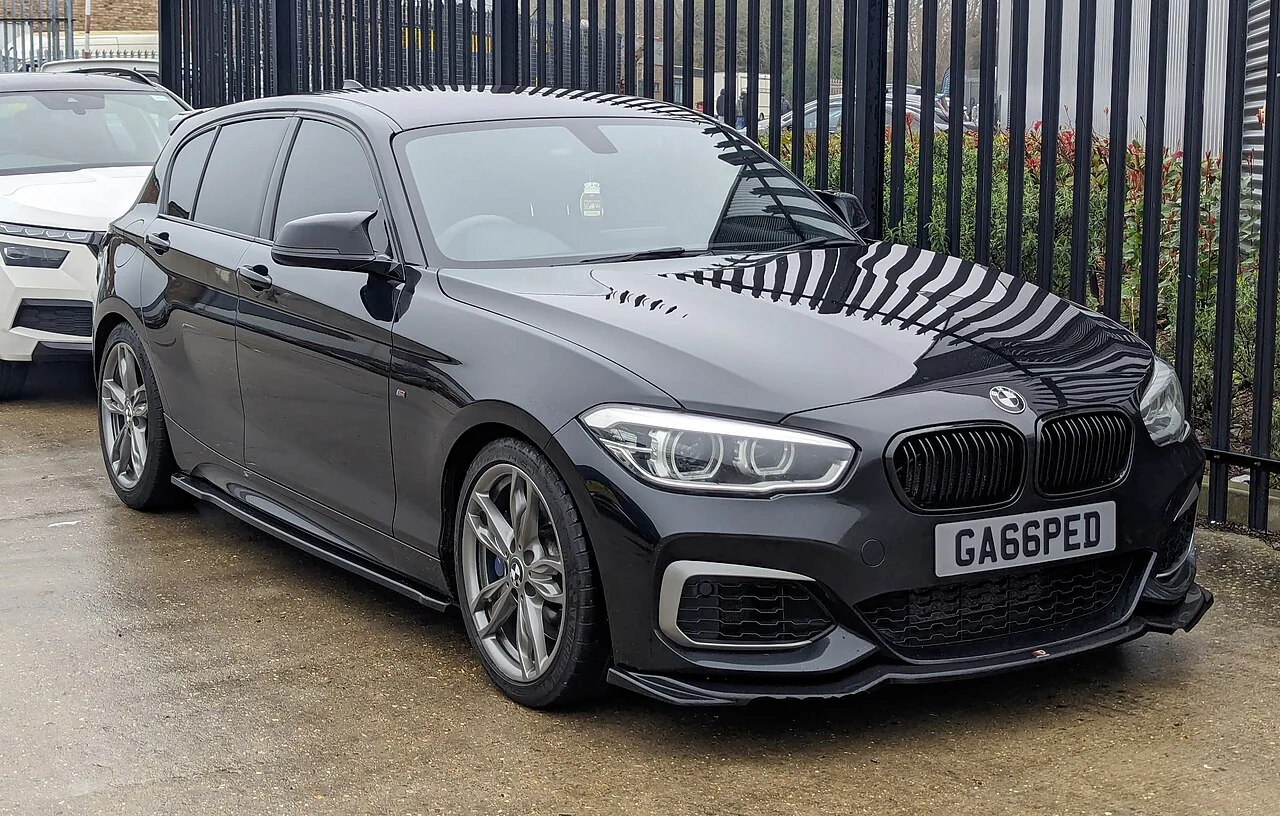
The same process works with a fictional machine. Our look at GTA 6's '95 Grotti Cheetah follows its visual connections to real Italian supercars. For the practical questions that follow an automotive obsession, start with our BMW M140i ownership introduction.
Research-led editorial prepared with AI assistance and checked against the linked sources. No first-hand road test or gameplay test is claimed.
More from Car Culture